HERE WE GO

“Bat Lab” targets the science of the ballpark
A ball hurtles toward home plate and the batter swings. Contact.
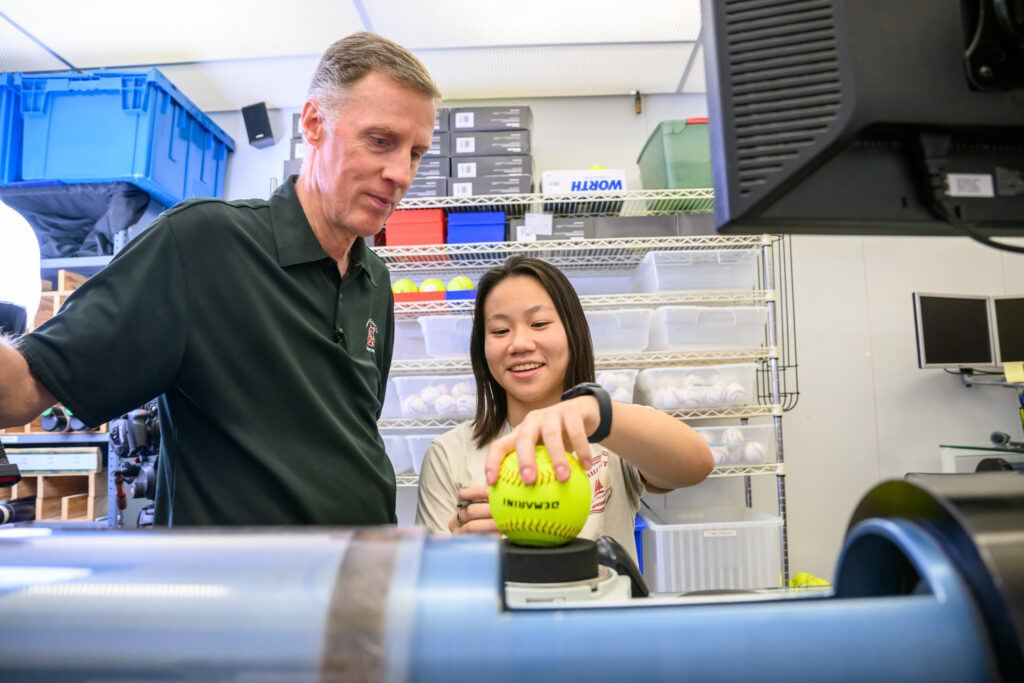
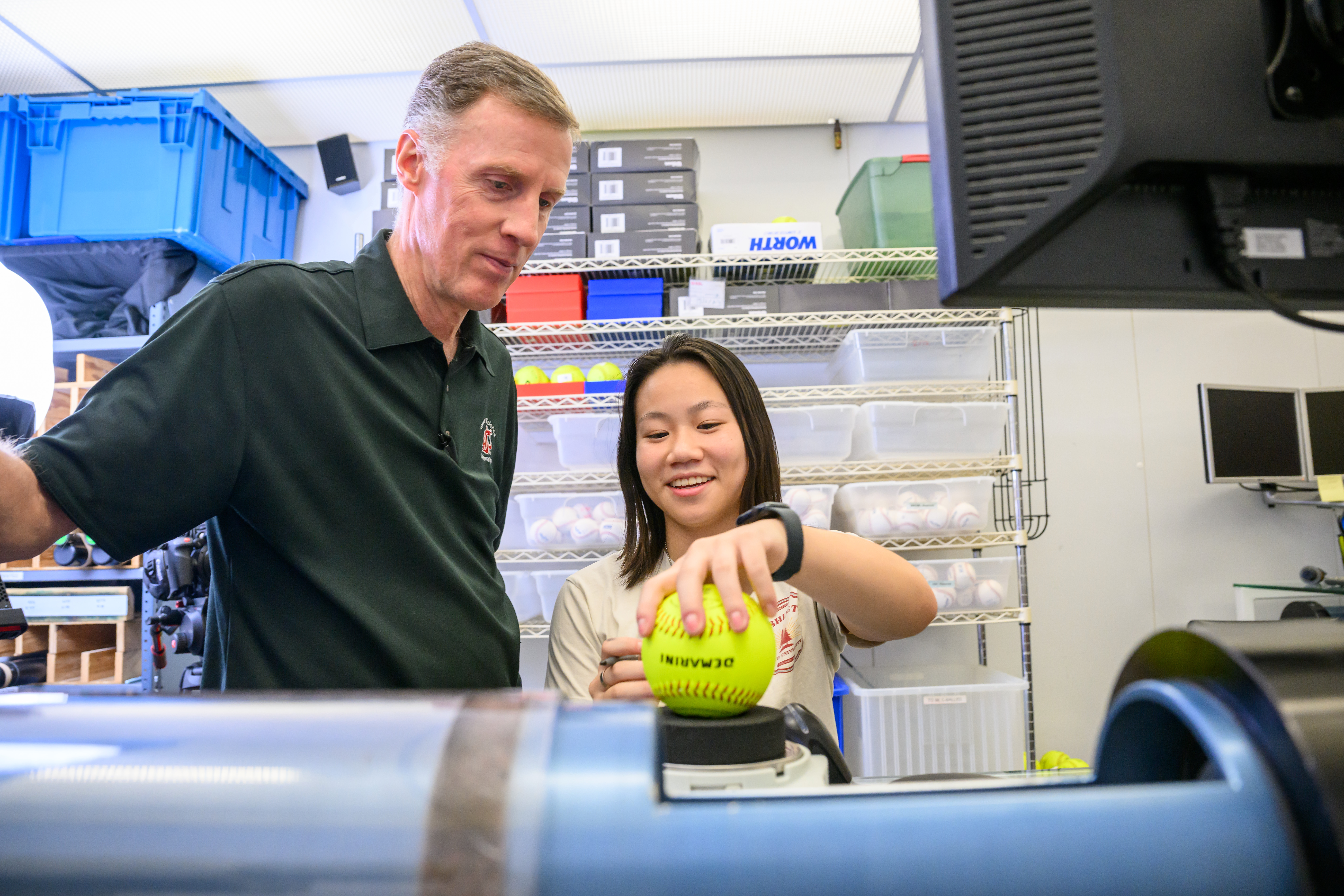
These are rituals of the ballpark. But to Professor Lloyd Smith and the researchers at Washington State University’s Sports Science Laboratory, that crack of a bat against a ball is the sound of science.
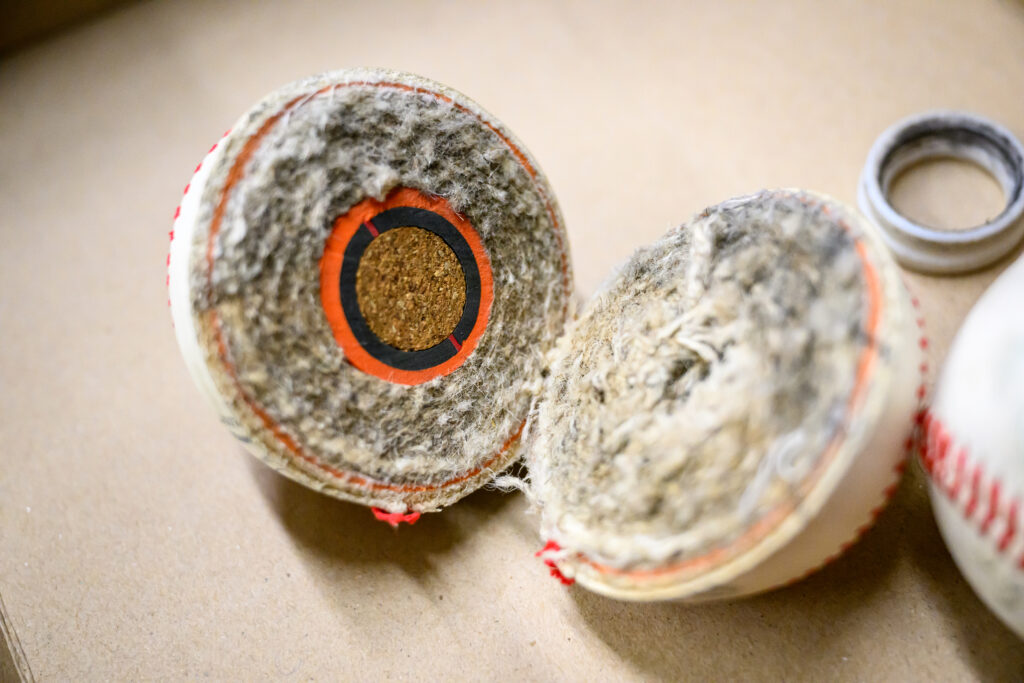
Where others watch for curveballs, Smith and his fellow researchers are more interested in a ball’s coefficient of restitution. They measure a bat’s mass moment of inertia and balance point. They look for the smallest changes in a ball’s seam height to gauge the effect on drag.
Smith is such a recognized authority in the science of bats and balls that Major League Baseball enlisted his help to discover why there had been more home runs than usual, a trend that raised dark rumors of “juiced” balls.
Smith is no baseball superfan. “It was really all coincidence,” he says.
With a doctorate in mechanical engineering, experience at WSU’s renowned Composite Materials & Engineering Center, and an interest in experimental design, he came up with a way to test baseball bats. Pretty soon the federations that regulate softball and baseball were interested. Then the equipment manufacturers wanted to work with him.
Now faculty, researchers, staff, and students in WSU’s Sports Science Laboratory test bats for the NCAA, and for USA Baseball and USA Softball. They certify bats for sports equipment manufacturers. Major League Baseball contracts with the lab to test for ball drag. And lab personnel visit every major league ballpark annually to evaluate the accuracy of the systems that show the strike zone over home plate.
All of these tests are unique to the lab and use methods like ball cannons, speed sensors, cameras, and computer modeling. “We have non-contact lasers to measure the seam height profile of a baseball with over a million data points,” Smith says.
I certainly find baseball much more interesting now, though when I watch a game I’m looking at different things than your typical fan is.
Lloyd Smith
Baseball isn’t the only game at the Sports Science Lab, which specializes generally in the dynamics of ball and bat collisions. That includes work in ice hockey, badminton, soccer, cricket, and golf.
After decades of working on the science of the ballpark, Smith says he has become a baseball fan, of sorts.
“I certainly find baseball much more interesting now, though when I watch a game I’m looking at different things than your typical fan is.”


Tell Your Story
Rehab isn’t just for humans

Mass timber on the rise

At WSU, the animal doctors are in

Growing older, living better
WSU builds on the lessons from Covid

“We worry so you don’t have to”

Robotic gripper could offer a helping hand in the apple orchard

Health for the whole person
Students help solve salmon puzzle

Murrow News Fellowship puts more local reporters on the beat
Partners in the field
WSU grizzlies put coolers to the test

Master Gardeners know all the dirt
“Bat Lab” targets the science of the ballpark

High expectations, high support for first gen
Community care is the curriculum