HERE WE GO


“We worry so you don’t have to”
WSU’s sophisticated laboratories and trained scientists are at the regional and national forefront of food security.
The food stocked on shelves and in coolers at your favorite grocery store. Meals served at restaurants or at home in your kitchen.
A sophisticated network of laboratories and trained scientists at Washington State University is instrumental in helping protect the food supplies that end up in pantries and on plates across the Pacific Northwest – and the nation.
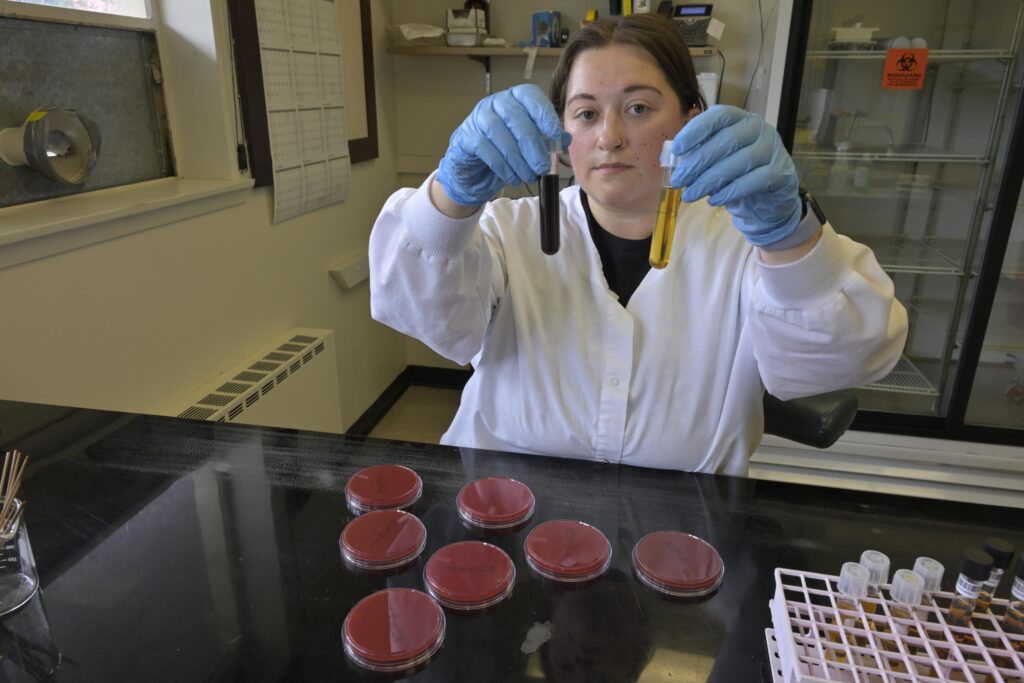
The university’s Washington Animal Disease Diagnostic Laboratory (WADDL) conducts more than 250,000 tests per year monitoring for dangerous pathogens and other health risks.
“There’s an unofficial motto here that goes, ‘We worry so you don’t have to,’” explains veterinary pathologist Kevin Snekvik, who serves as WADDL’s executive director. “From the safety of your pets to the food in your refrigerator we’re testing thousands of samples weekly and monitoring herds, flocks and even schools of fish and other wildlife throughout the region to help keep food supplies secure.”
The 61,000-square-foot WADDL complex on the university’s Pullman campus in conjunction with the WADDL Avian Health and Food Safety Laboratory at WSU’s research center in Puyallup support broad testing and early disease detection designed to protect public health and overall food safety within the state’s $1.5 billion animal agriculture industry and beyond.
WSU scientists have been at the forefront of helping shape the nation’s food safety network for the past half century, and recently were tapped by federal authorities to take on an expanded role in the nation’s response to avian flu threats.
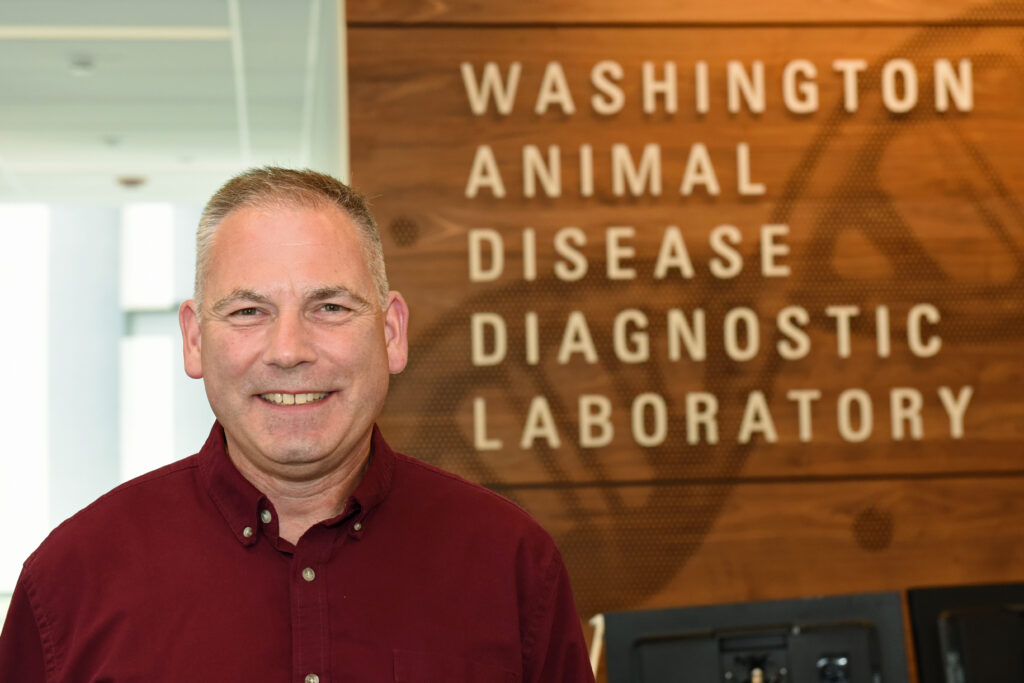
From the safety of your pets to the food in your refrigerator we’re testing thousands of samples weekly and monitoring herds, flocks and even schools of fish and other wildlife throughout the region to help keep food supplies secure.
Kevin Snekvik
Serving on the front lines of food security is nothing new for WSU.
WADDL is a founding laboratory in the U.S. Department of Agriculture’s National Animal Health Laboratory Network and operates as a Level 1 facility, serving as part of a first-alert system to detect biological threats to animal agriculture, public health and the nation’s food supplies. It’s also a member of the U.S. Food and Drug Administration’s Veterinary Laboratory Investigation and Response Network, and the Centers for Disease Control Laboratory Response Network for Bioterrorism.
The overwhelming majority of tests WADDL conducts on any given day come back negative, which is a testament to the quality of the region’s food system. But when they come back positive, it sets in motion a carefully designed system of verification tests and alerts to state and federal authorities, and in turn international authorities if necessary, to quickly contain potential harm.
In 2003, for example, when the first case of bovine spongiform encephalopathy (also known as mad cow disease) in the United States was detected in Washington, WADDL immediately stepped forward in the national response and now is one of just five facilities in the nation tapped to help monitor for bovine spongiform encephalopathy. WADDL laboratories also are proving instrumental in helping detect and track avian influenza (H5N1) outbreaks, having helped federal authorities discover how the pathogen was moving so quickly from state to state within different dairy herds. And, in the summer of 2024 it detected the first case of chronic wasting disease in a deer in Eastern Washington that has led to increased surveillance.
The facility’s mission also includes education. Every WSU veterinary student spends at least two weeks at WADDL becoming immersed in animal disease testing and procedures. It is home to the nation’s largest graduate-level veterinary pathology program and is so integral to Washington’s food security system that the state veterinarian has established a satellite office within the WADDL complex, enabling the laboratory and students to engage with key state officials.
It’s a responsibility the WADDL staff doesn’t take for granted.
“We fully appreciate the importance of what we do,” Snekvik says. “We are engaged at multiple levels and are fortunate to receive support from state and federal agencies that help us continue to advance our mission.”

Tell Your Story
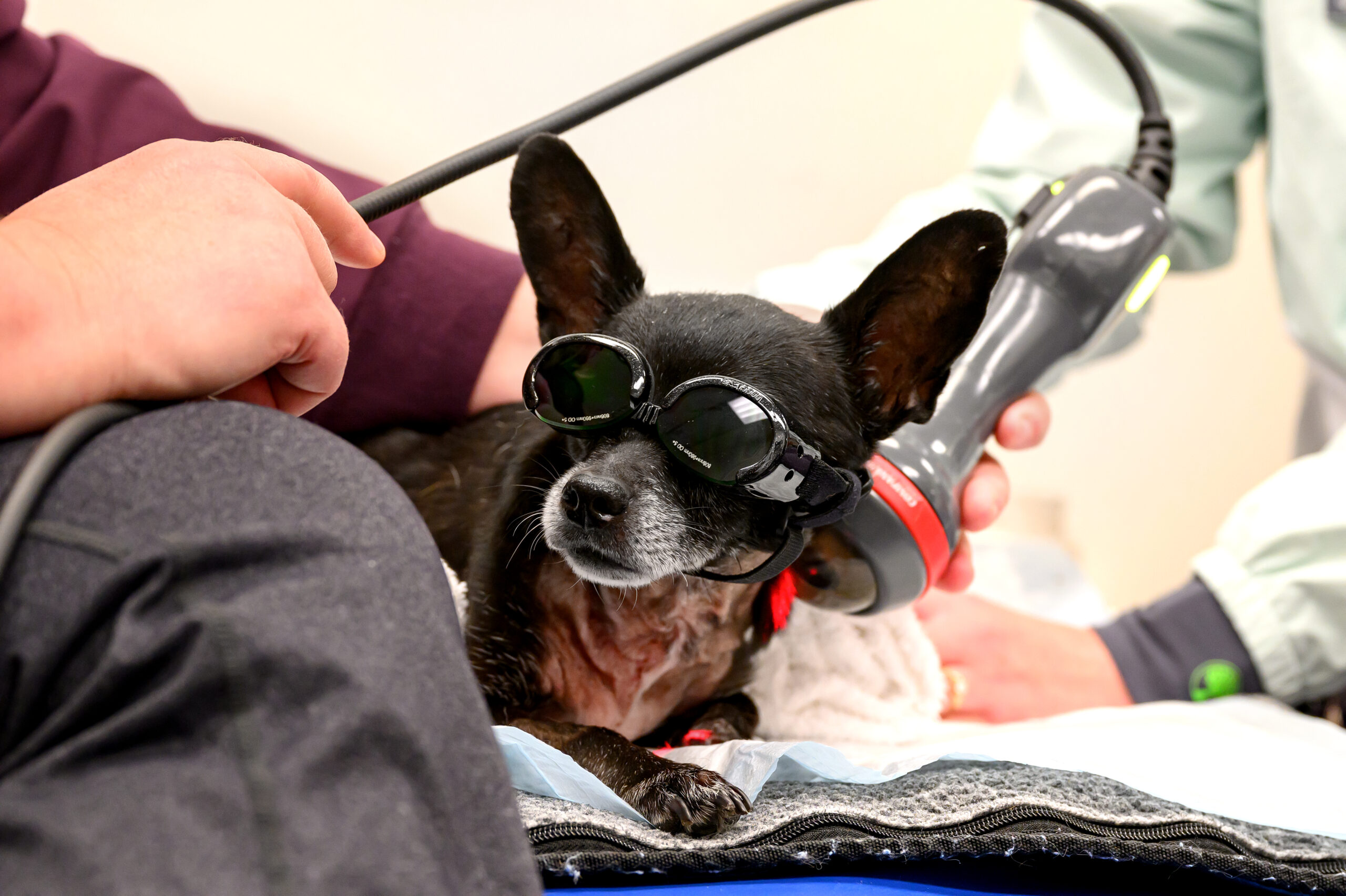
Rehab isn’t just for humans

Mass timber on the rise
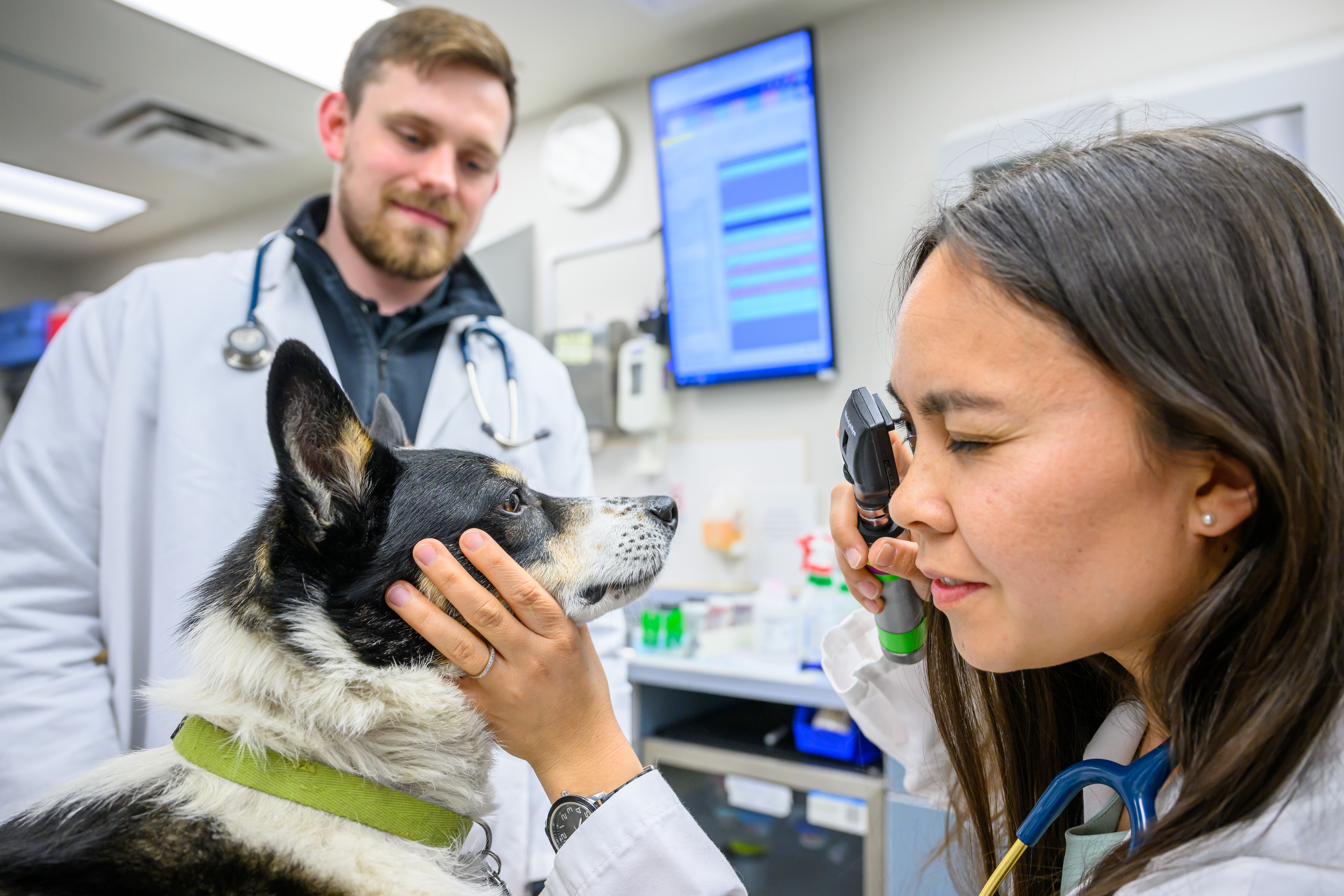
At WSU, the animal doctors are in
Growing older, living better
WSU builds on the lessons from Covid

“We worry so you don’t have to”
Robotic gripper could offer a helping hand in the apple orchard
Health for the whole person
Students help solve salmon puzzle

Murrow News Fellowship puts more local reporters on the beat
Partners in the field
WSU grizzlies put coolers to the test

Master Gardeners know all the dirt
“Bat Lab” targets the science of the ballpark
High expectations, high support for first gen
Community care is the curriculum