HERE WE GO

Murrow News Fellowship puts more local reporters on the beat
WSU-led program bolsters the state’s news ecosystem.
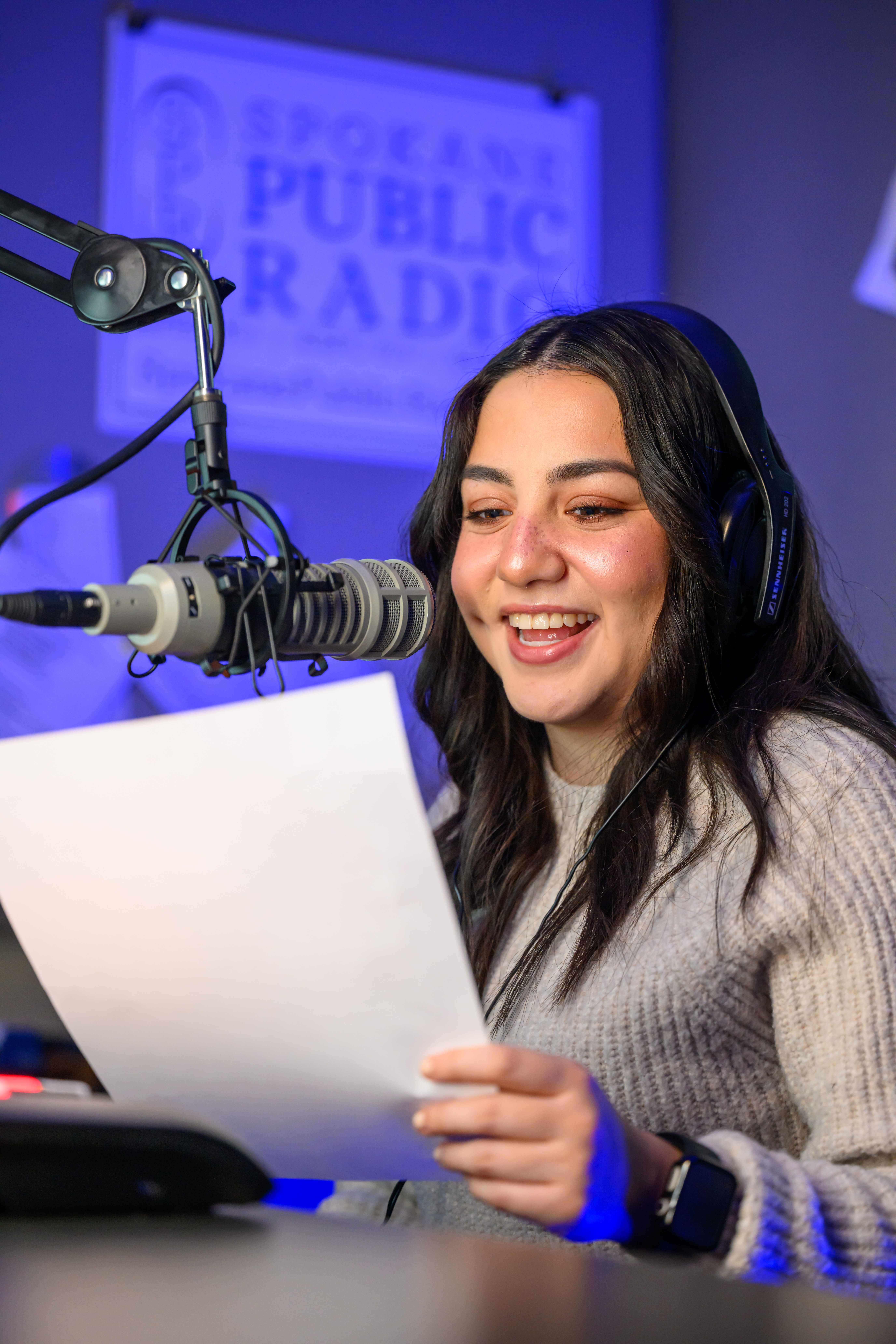
Newsrooms across Washington have more reporters covering local government, the environment, marginalized communities, and other important beats thanks to a creative program from the Edward R. Murrow College of Communication at Washington State University.
Washington state lawmakers last year set aside funding for the Murrow News Fellowship. Now the first group of 16 reporters are working in newsrooms statewide.
The stories they produce are available to any news outlet to use free of charge, whether broadcast, print, digital or radio. Another two to three Fellows will cover the 2025 legislative session in Olympia, supplementing a dwindling statehouse press corps.
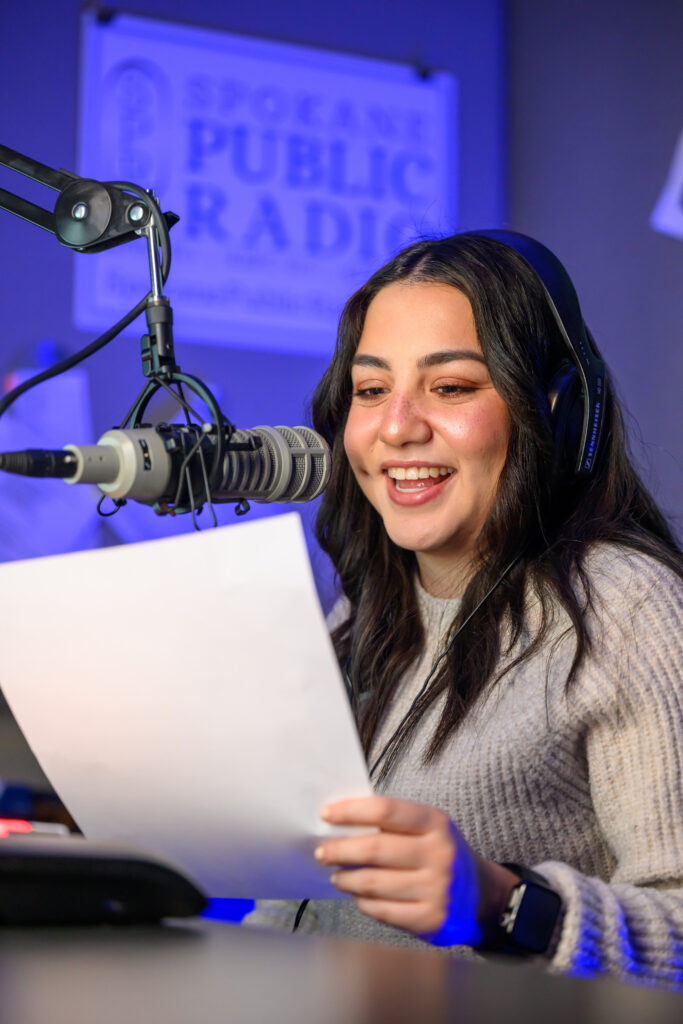
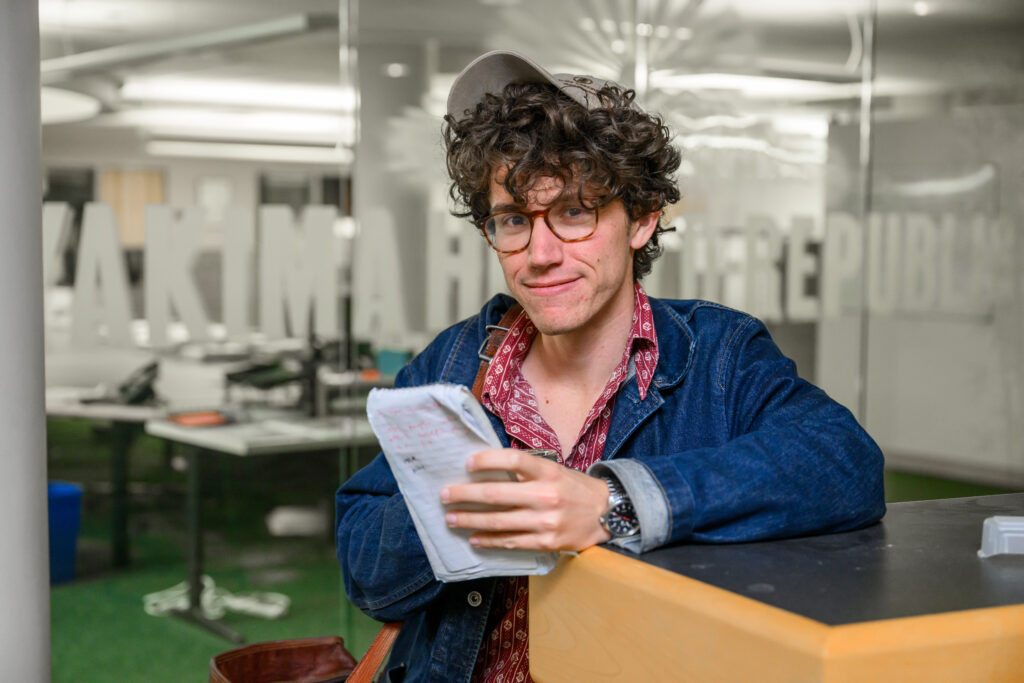
Murrow News Fellows are recent graduates of journalism programs or are early-career journalists.
Questen Inghram is the latter; he graduated from Western Washington University five years ago. As a Murrow News Fellow he’s covering several city governments for the Yakima Herald-Republic and focusing on water and agriculture issues.
“I just feel so lucky,” he said, noting the ongoing training offered to Murrow Fellows as part of the program. “I have a job where I learn every day and I’m in a peer group where we’re going to be learning even more.”
Reneé Dìaz is one of a handful of participants whose fellowship is shared by two newsrooms, in her case the Wenatchee World and Northwest Public Broadcasting. The 2023 University of Washington graduate will focus on Latino communities among other beats. She’s learning audio storytelling and the fellowship made it possible for her to attend the National Association of Hispanic Journalists conference last summer.
“I knew I wanted to work in communities I’m passionate about, and the Murrow Fellowship gave me a head start,” Dìaz said.
The Murrow News Fellowship also produced a report detailing Washington’s news ecosystem, which now includes traditional media outlets, nonprofit news sites, and less reputable sites peddling misinformation and disinformation.
The Murrow News Fellowship isn’t a cure for the struggling news industry, but it’s a step in the right direction, said Ben Shors, program director and journalism and media production chair at the Murrow College.
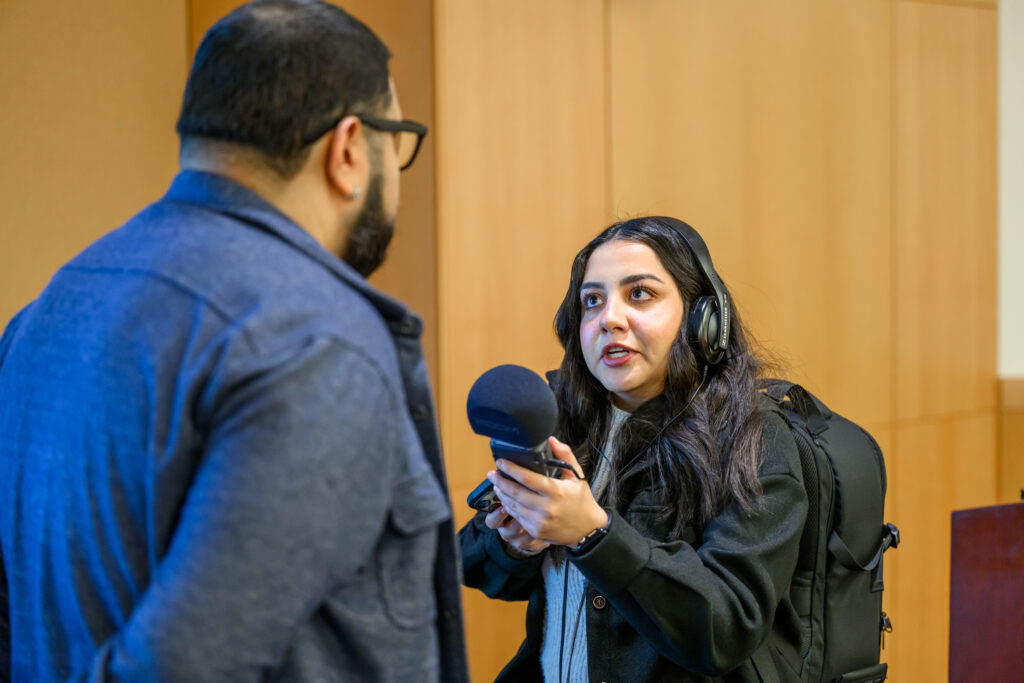
We need informed voters, we need engaged community members. For us this is not just a journalism crisis, it’s a democracy issue.
Ben Shors
“This is a significant investment in Washington’s news infrastructure at a critical juncture for journalism,” Shors said. “From urban centers to rural communities, the need for reliable local information is clear. Our responsibility is to ensure good stewardship of this program, to engage with reporters, editors and publishers, and to direct a program with the flexibility to be responsive to a rapidly evolving media landscape.”
With a century-old business model upended by the internet, newspapers have closed and newsrooms have been hollowed out. There are news deserts, particularly for local information, across the nation.
“We need informed voters, we need engaged community members,” Shors said. “For us this is not just a journalism crisis, it’s a democracy issue.”
The model can be replicated elsewhere, in all kinds of communities. From WSU’s standpoint, it aligns with the university’s mission.
Said Shors, “This is land-grant university work we’re doing, in service to the state of Washington.”

Tell Your Story
Rehab isn’t just for humans
Mass timber on the rise
At WSU, the animal doctors are in
Growing older, living better
WSU builds on the lessons from Covid

“We worry so you don’t have to”
Robotic gripper could offer a helping hand in the apple orchard
Health for the whole person
Students help solve salmon puzzle
Murrow News Fellowship puts more local reporters on the beat
Partners in the field
WSU grizzlies put coolers to the test

Master Gardeners know all the dirt
“Bat Lab” targets the science of the ballpark
High expectations, high support for first gen
Community care is the curriculum